When an average college graduate or a general degree student decides to prepare for the UPSC Civil Services Examination (CSE), the decision is almost always met with skepticism:
- "UPSC is only for IITians, doctors, or Delhi University toppers."
- "You barely scored 60% in your graduation; how will you compete with lakhs of serious aspirants?"
- "The syllabus is an endless ocean; you will lose your prime youth."
These doubts are not just external. Deep down, almost every non-topper aspirant wrestles with an inner imposter syndrome: "Am I smart enough to become an IAS or IPS officer?"
The reality, proven year after year in the UPSC final merit list, tells a completely different story. Hundreds of candidates with ordinary school grades, non-premier college backgrounds, and multiple academic setbacks regularly secure top ranks.
UPSC does not test your past academic pedigree. It tests your present intellectual discipline, clarity of thought, and emotional stamina.
However, general students do face unique, genuine hurdles during their preparation journey. In this definitive guide, we break down the 8 most critical challenges faced by general and beginner students in UPSC preparation—along with practical, actionable strategies to overcome each one.

1. The "Average Student" Dilemma: Can You Really Crack UPSC?
Before diving into books and syllabi, the first battle every general student fights is psychological.
The Myth of the Born Genius
Mainstream coaching institutes love highlighting toppers from IITs and national law universities because it sells high-fee foundation courses. What they rarely publicize is that over 60% of candidates who qualify UPSC CSE come from regional state universities, humanities colleges, and tier-3 degree institutions.
| Parameter | Academic Exams (College/Board) | UPSC Civil Services Examination |
|---|---|---|
| Primary Skill Tested | Rote memorization & textbook replication | Conceptual clarity, synthesis & analytical judgment |
| Pass Benchmark | 90%+ for distinction | ~45% to 50% aggregate score for Top Ranks |
| Syllabus Focus | Fixed chapters and predictable patterns | Dynamic real-world issues linked to core foundational static syllabus |
| Determinant of Success | Short burst of cramming before exams | 12 to 18 months of steady, unglamorous daily routine |
The Truth
If you secured average marks in college, it often meant you were unmotivated by theoretical campus curricula or exam formats—not that your cognitive capacity is deficient. When average students apply disciplined focus to a mission they truly care about, their humility and willingness to learn from scratch often give them an edge over complacent college toppers.
2. Challenge 1: The "Syllabus Mountain" and Not Knowing Where to Begin
The Problem
When a general student looks at the official UPSC notification for the first time, they see General Studies I through IV, CSAT, Essay, and two Optional Subject papers. The sheer volume creates analysis paralysis:
- "Should I finish NCERTs first or buy standard books?"
- "Should I start with History, Polity, or Economics?"
- "Should I begin answer writing on Day 1?"
Unable to decide, aspirants spend weeks collecting guidance videos without opening a single foundational chapter.
The Proven Solution: The Reverse-Engineering Framework
Instead of attempting to conquer the entire syllabus in one breath, deconstruct it backwards:
- Print the Official Syllabus Copy: Keep it on your desk. Every topic you read must trace directly to a syllabus line item (e.g., GS II: Indian Constitution—historical underpinnings, evolution, features, amendments).
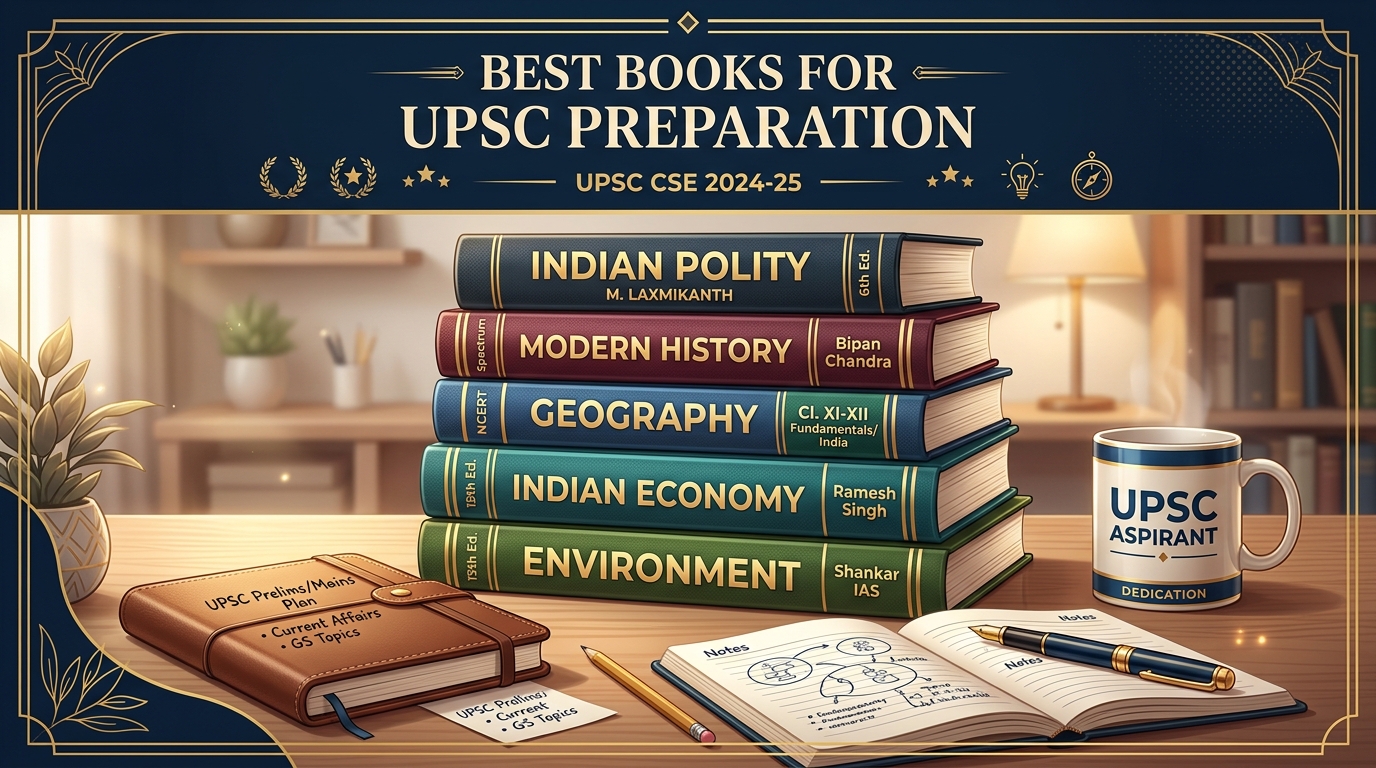
- Start with "High-Certainty" Core Subjects: Begin with Indian Polity (M. Laxmikanth) and Modern Indian History (Spectrum). These subjects have well-defined boundaries and provide quick conceptual wins that build study momentum.
- Use the 3-Stage Daily Block:
- Morning Block (3 Hours): Heavy static core subject (e.g., Polity or Economics).
- Afternoon Block (2 Hours): Current affairs reading and static mapping.
- Evening Block (2 Hours): Revision of previous days + solving 25 topic-wise MCQs.
[!TIP] Use our free Online Study Schedule Planner to organize your daily hours across static subjects, revision, and CSAT without burning out.
3. Challenge 2: The "PDF Hoarding" & Information Overload Trap
The Problem
General students often suffer from acute FOMO (Fear of Missing Out). Seeing seniors in library basements surrounded by 20 thick binders creates anxiety that their own booklist is inadequate. Consequently, aspirants:
- Join 40 different Telegram channels sharing pirated compilations.
- Download 15 different monthly current affairs magazines.
- Purchase 4 different books for the same subject (e.g., Bipin Chandra + Spectrum + Grover + NCERT for Modern History).
Result: A digital graveyard of unread PDFs and zero depth of understanding.
[Too Many Sources] ──> [Superficial Reading] ──> [Zero Retention] ──> [Panic in Exam Hall]
The Proven Solution: The 1:10 Resource Rule
Follow the golden rule practiced by consistent rank-holders:
$$\mathbf{1\text{ Standard Book Read } 10\text{ Times} \gg 10\text{ Reference Books Read Once}}$$
- Standardize Your Resource Base: For every GS paper, pick strictly one primary source and stick to it until your exam date:
- Polity: M. Laxmikanth
- Modern History: Spectrum by Rajiv Ahir
- Economy: Vivek Singh or Mrunal Notes + Budget/Economic Survey summary
- Geography: NCERT Class 11 & 12 (Physical & Human Geography)
- Environment: PMF IAS or Shankar IAS
- Delete Clutter: Unsubscribe from noisy Telegram channels and social media groups. If a piece of information is genuinely essential for UPSC, it will appear in standard monthly compilations.
4. Challenge 3: The Current Affairs Rabbit Hole (Spending 4–5 Hours Daily)
The Problem
Many general students spend up to 4 to 5 hours every single morning reading The Hindu or The Indian Express, highlighting nearly every paragraph and writing extensive daily diary notes.
By midday, their mental energy is drained. Static subjects like History, Geography, and Polity are completely neglected. When exam day arrives, they realize that 65% to 70% of Prelims questions test static concepts, even if the prompt was triggered by a recent news event.
The Proven Solution: The 90-Minute Rule & Static Linkage
- Cap Daily Newspaper Reading at 60 to 75 Minutes: Read primarily for:
- Editorials and opinion columns (builds analytical vocabulary for Mains).
- National policy announcements, landmark Supreme Court rulings, and environmental treaties.
- Skip political bickering, regional crime reports, and speculative articles.
- Do Not Make Verbatim Daily Notes: Do not copy newspaper text into notebooks. Reputed monthly compilations consolidate daily developments with background context far more efficiently.
- Practice Static-Dynamic Linkage: When you read an article about the Governor's withholding of state assembly bills, immediately open Laxmikanth's Chapter on the Governor (Article 200). That is how UPSC formulates questions.
5. Challenge 4: Memory Decay & The "I Keep Forgetting" Panic
The Problem
A common confession among aspirants: "I read 20 chapters of Polity last month. Today, when I attempt a mock test, I cannot even recall the difference between Article 32 and Article 226."
Because the UPSC syllabus is colossal, passive reading creates an illusion of competence. You recognize the text when the book is open in front of you, but your brain cannot actively retrieve it under timed exam stress.
The Proven Solution: The 1-7-30 Spaced Repetition Cycle
Human memory naturally decays along the Ebbinghaus Forgetting Curve unless interrupted by systematic retrieval practice:
[Day 1: First Study Session]
       ↓ (Review within 24 Hours - 15 Mins)
[Day 7: First Active Recall Check - 30 Mins]
       ↓ (Solve 20 MCQs or Write 1 Mains Answer)
[Day 30: Consolidation & Micro-Notes - 45 Mins]
       ↓
[Permanent Long-Term Retention]
- Never Re-read Passively: When revising, close the book and write down key constitutional provisions, historical timelines, or river tributaries on a blank sheet of paper from memory.
- Make 10% Micro-Notes: Never summarize an entire textbook. Notes should only capture:
- Factual data points you repeatedly forget.
- Flowcharts and committee recommendations.
- Comparative tables (e.g., Fundamental Rights vs Directive Principles).
6. Challenge 5: Fear of Mains Answer Writing (The Perfectionist's Paralysis)
The Problem
General students frequently postpone answer writing with the excuse: "I will start writing answers once I finish 100% of my syllabus."
Here is the hard truth: No UPSC candidate in history has ever finished 100% of the syllabus.
Waiting for complete syllabus mastery before picking up a pen leads to catastrophic Mains failure. Many Prelims-cleared candidates freeze in the Mains examination room because they cannot formulate coherent 150-word arguments in under 7 minutes.
The Proven Solution: The Micro-Answer Writing Progression
Do not attempt full 250-word answers on Day 1. Use this graduated 3-step ladder:
Level 1: 50-Word Editorial Summaries (Weeks 1 to 4)
Level 2: Previous Year 10-Marker Structure Drills (Weeks 5 to 12)
Level 3: Timed 7-Minute Full Answers with Data & Flowcharts (Month 4 Onwards)
The Universal IBC Framework for UPSC Mains:
Every high-scoring UPSC Mains answer follows this clean skeleton:
- Introduction (15–20 Words): Direct definition, constitutional article, or recent statistical context.
- Body (100–120 Words): Split into 2 to 3 clearly labelled sub-headings directly addressing the question directives (Discuss, Critically Examine, Analyze). Use bullet points and small box diagrams where applicable.
- Way Forward / Conclusion (20–25 Words): Constructive, forward-looking summary citing relevant government vision documents (e.g., NITI Aayog SDG Index, Law Commission reports).
7. Challenge 6: Taking CSAT for Granted (The Silent Eliminator)
The Problem
In recent years, the Civil Services Aptitude Test (CSAT / Paper II) has evolved from a routine qualifying paper into the single biggest hurdle for thousands of aspirants.
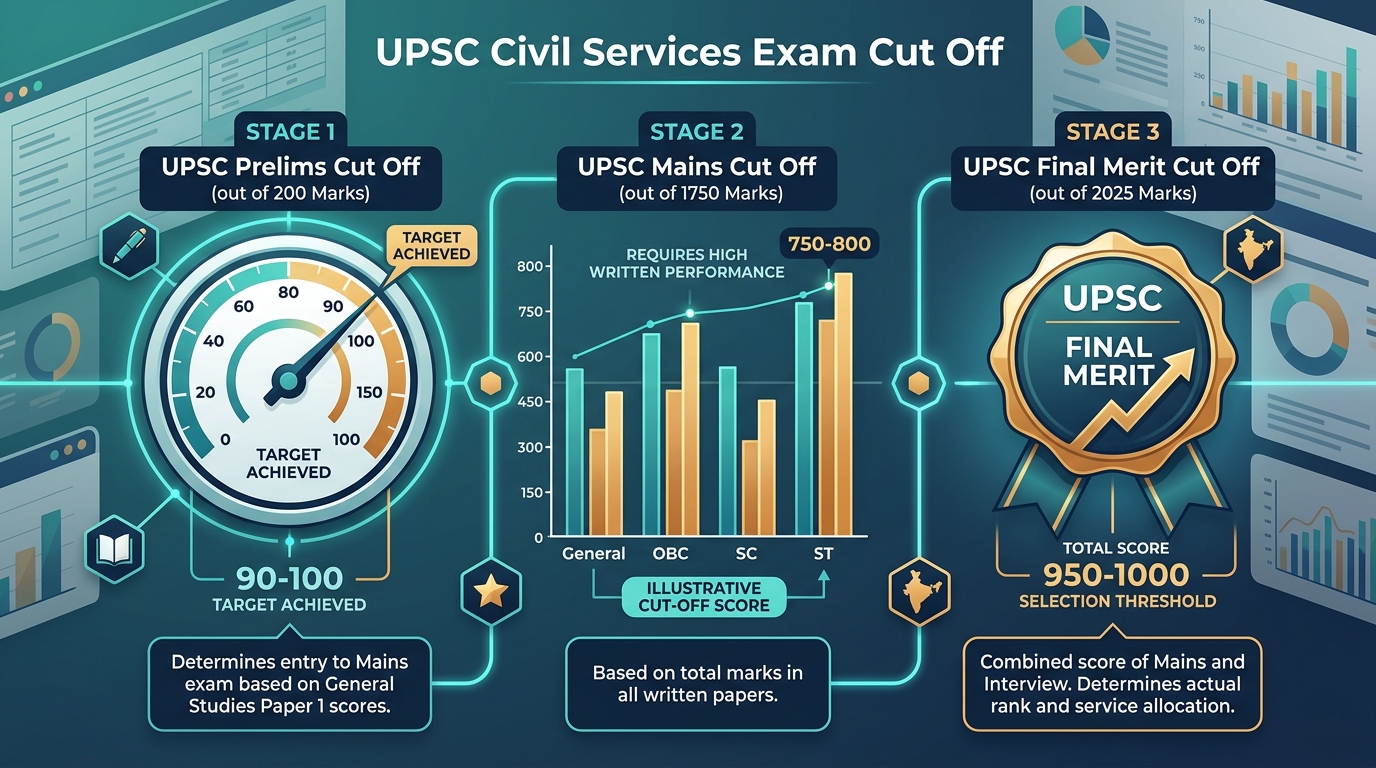
Every year, brilliant general students scoring 95+ marks in GS Paper 1 fail to qualify Prelims because they score 64 out of 200 in CSAT (qualifying cutoff is 33%, or 66.66 marks). Aspirants from non-mathematics backgrounds mistakenly assume: "I will just manage comprehension passages and clear the 66-mark barrier."
The Proven Solution: Systematic Weekly CSAT Drills
- Diagnose Your Baseline First: Download the official UPSC CSAT papers from 2021 to 2025. Solve one complete paper under strict 2-hour conditions with negative marking (-0.83 per wrong question).
- Dedicate 3 Hours Every Weekend:
- Master high-yield, predictable math topics: Number Systems, Percentages, Ratio & Proportion, Averages, Time & Work.
- Practice analytical reasoning: Syllogisms, Seating Arrangements, Coding-Decoding.
- Practice Precision in Reading Comprehension: In CSAT reading passages, answer solely based on the author's explicit premises—never import your personal GS knowledge or external assumptions.
[!IMPORTANT] You can practice free timed CSAT mock questions directly with detailed explanations using our UPSC CSAT Online Practice Test.
8. Challenge 7: Mock Test Phobia and Negative Marking Traps
The Problem
When general students attempt their first full-length Prelims mock test, they often score 55 to 65 marks out of 200. This triggers acute panic:
- "I have studied for 6 months and cannot even cross 70 marks."
- "Mock tests are discouraging me; I will just keep reading textbooks instead."
Avoiding mock tests prevents aspirants from learning how to navigate negative marking (-0.66 per incorrect question).
The Proven Solution: The 3-Round Attempt Strategy
Toppers don't score 100+ marks because they know all 100 questions. They score high because they manage calculated risk across three distinct passes:
Round 1 (100% Certainty): Solve 35–45 questions where you are absolutely confident.
Round 2 (50-50 Elimination): Eliminate 2 options across 25–30 questions; make educated attempts.
Round 3 (Calculated Risk): Re-evaluate 5–8 high-probability questions to hit the sweet spot (78–88 total attempts).
- Maintain an Error Log Notebook: After every mock test, write down why each question was missed. Was it a factual gap (you never read it), a conceptual confusion (misunderstood the rule), or a silly reading error (missed the word "Not Correct" in the prompt)? Fixing your error patterns yields a 20-mark jump within 5 mock tests.
9. Challenge 8: Loneliness, Self-Doubt & The 2-Year Endurance Marathon
The Problem
Preparing for UPSC is an isolating journey. While your college classmates celebrate corporate promotions, European holidays, and salary hikes, you are sitting in a modest room memorizing the Indus Valley Civilization and fiscal deficit targets.
Prolonged isolation breeds severe self-doubt, family friction, and emotional burnout.
The Proven Solution: Building an Emotional Defense Shield
- Measure Daily Inputs, Not Eventual Outcomes: You cannot control the exact UPSC final cutoff or which questions the commission selects. You can control whether you put in 7 honest hours of focused study today. Treat daily consistency as your primary victory.
- Curate an Unapologetic Digital Boundary: Mute Instagram, LinkedIn, and peer WhatsApp groups that induce comparison anxiety. Your timeline is unique; building a foundation for national governance requires time and patience.
- Maintain One Physical Anchor: Do not eliminate sleep, proper nutrition, or light exercise. A 30-minute daily walk or workout releases endorphins that counteract chronic study fatigue and mental fog.
- Plan an Honest Safety Net: UPSC is a high-stakes exam. Knowing your age limits and attempt rules eliminates panic. Check your exact permissible attempts using our Age Eligibility Calculator.
10. The 6-Month Reset Roadmap for General Aspirants
If you feel your preparation is stalled or unstructured, here is a practical 6-month turnaround plan:
┌────────────────────────────────────────────────────────────────────────┐
│ Month 1 & 2: Foundational Core (Polity + Modern History + Syllabus)   │
│ Month 3 & 4: Analytical Depth (Economy + Geography + Environment)     │
│ Month 5 & 6: Synthesis (Daily MCQs + Mains IBC Answers + CSAT Drills)  │
└────────────────────────────────────────────────────────────────────────┘
| Phase | Core Focus | Daily Target | Key Milestone to Verify |
|---|---|---|---|
| Phase 1 (Months 1–2) | NCERTs (Class 11/12) + Polity + Modern History | 6–7 Hours / Day | Memorize GS syllabus topics & complete 10 years of PYQs in Polity & History |
| Phase 2 (Months 3–4) | Economy + Geography + Environment + CSAT | 7–8 Hours / Day | Understand budget/economic survey basics; score ≥75 in CSAT diagnostic test |
| Phase 3 (Months 5–6) | Test Series + Mains Answer Writing + Ethics | 8–9 Hours / Day | Complete 25 full-length Prelims mocks; write 50 timed Mains answers |
Summary: From "Average Student" to Confident Aspirant
Every civil servant you admire today—from district collectors resolving rural water crises to police chiefs leading law enforcement operations—started as an anxious beginner staring at an overwhelming booklist.
What separated those who cleared from those who gave up was not genius IQ; it was the discipline to show up on days when motivation was zero.
- You do not need to read 50 books; master your core standard sources.
- You do not need an IIT degree; you need an inquisitive, structured analytical mindset.
- You do not need 16 hours of daily study; 7 to 8 honest, distraction-free hours are more than enough.
Take ownership of your preparation today. Deconstruct the syllabus, respect your revision cycles, solve previous year papers, and take pride in the quiet work you do every day.
Recommended Free Resources for Your UPSC Journey:
- Official Syllabus Roadmap: Comprehensive UPSC Syllabus 2026 Guide
- Strategy & Routine Hub: UPSC Preparation Hub
- Interactive Tool: Free Daily Study Schedule Planner
- Practice Hub: Free UPSC Prelims Practice Mock Tests
- Previous Year Papers: Solved UPSC PYQ Analysis
Founder & Chief Educator at Competition Prepare. Dedicated to helping competitive exam aspirants crack UPSC CSE, NEET UG, Banking, SSC, Railway & OPSC with structured roadmaps, high-yield study notes, and proven exam strategies.
Discussion & Aspirant Comments
0Have a question, study tip, or doubt regarding this article? Share your thoughts below.